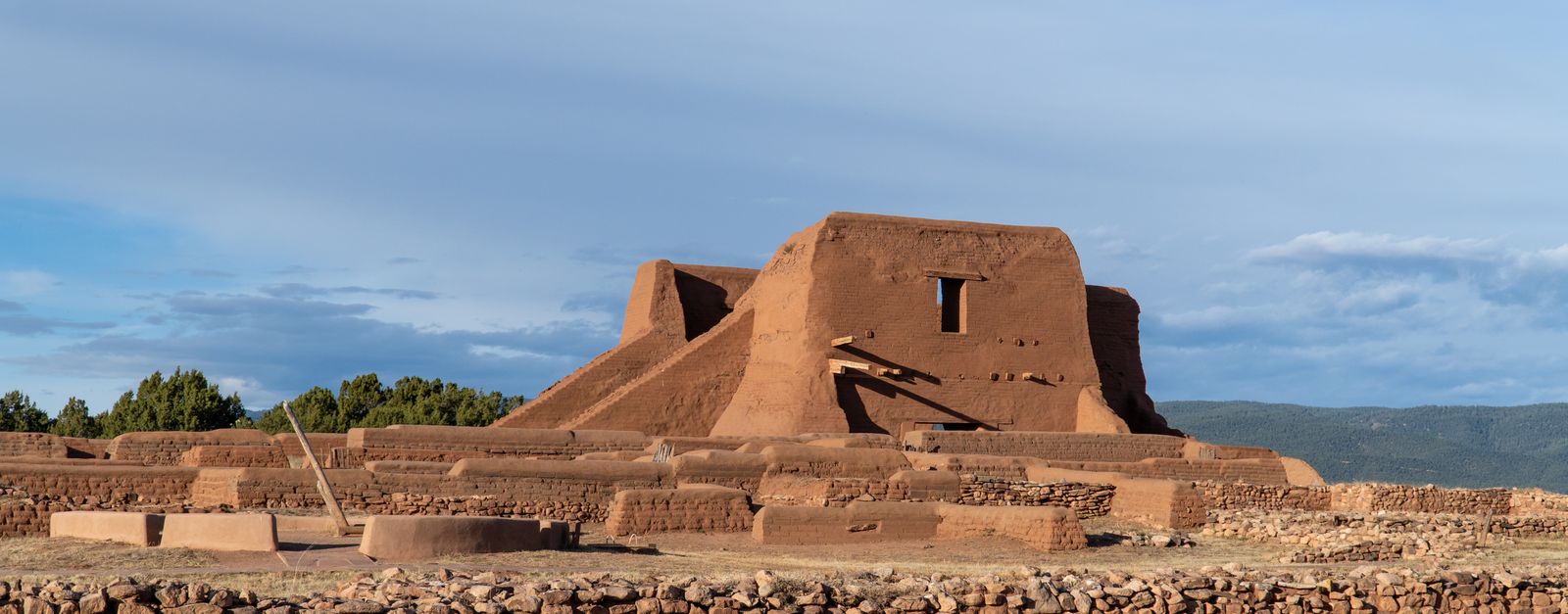
Presbyterian plan ending · IHS and tribal clinics
Does IHS Take Medicare Advantage? If Your Presbyterian Plan Is Ending
Your clinic will still see you. The question for 2027 is whether your next plan pays the clinic, and what happens when the clinic sends you somewhere else. CMS wrote a guide for tribal elders on exactly this, and it says to start with a phone call to the clinic, not to an insurance company.

The bottom line
- You can be seen at your IHS or tribal clinic with any Medicare coverage. A plan ending does not change your eligibility there.
- Payment is what differs. CMS says a Medicare Advantage plan "may pay less or not pay" an Indian health provider that is outside its network. Original Medicare pays for covered services.
- Referrals differ too. Under a plan, a referral outside the clinic may need the plan's approval and an in-network provider.
- CMS's first step: call the clinic's benefits coordinator before you enroll in anything.
- If you choose nothing, you have Original Medicare on January 1, 2027, without a Part D plan.
- Dates: Annual Enrollment October 15 – December 7, 2026; the Presbyterian Senior Care plans end December 31, 2026. Presbyterian Dual Plus continues.
For the general picture, including dates and the other paths, see our guide to Presbyterian Medicare Advantage ending in New Mexico.
An IHS or tribal clinic does not turn away an eligible patient because of the Medicare plan on the card, so in that sense IHS "takes" Medicare Advantage. Whether the plan pays the clinic is a different matter. The Centers for Medicare & Medicaid Services says it plainly in its guide for tribal Medicare beneficiaries: "You can always see your IHCP, however, not all IHCPs are in-network. Plans may pay less or not pay IHCPs for the Medicare covered services provided" (CMS Tribal Affairs, A Guide to Original Medicare and Medicare Advantage for Tribal Medicare Beneficiaries). IHCP is CMS's short form for Indian Health Care Provider: an IHS facility, a tribally run program or an urban Indian clinic. For a Presbyterian member, the plan ending on December 31, 2026 means this question gets answered fresh, with a different company, for 2027.
Will a Medicare Advantage plan pay my IHS or tribal clinic?
It depends on the plan and on the clinic, and you cannot tell from the plan's brochure. CMS sets the two situations side by side. Under Original Medicare: "Your IHCP will be paid for Medicare covered services provided." Under Medicare Advantage: "You can still see your IHCP, but if the IHCP is out-of-network, they may not be paid for services provided" (CMS Tribal Affairs guide).
That matters to you even though the clinic does not charge you. The Indian Health Service is not insurance. CMS describes it as "a part of the federal government that delivers health care," working "within yearly budgets approved by Congress," and says the IHS budget "only meets about half of the need" (CMS, 10 Important Facts about Indian Health Service and Health Insurance, May 2022). What a clinic collects from Medicare and other coverage stays with the clinic and pays for more services. A plan that does not pay the clinic takes that money out of the local program, visit after visit.
Plan type plays a part. Medicare.gov says that in an HMO "you generally must get your care and services from doctors, other health care providers, and hospitals in the plan's network," with exceptions for emergency care and out-of-area urgent care (Medicare.gov, HMOs). In a PPO "you can generally go to out-of-network providers for covered services, but you'll usually pay more" (Medicare.gov, PPOs). A PPO therefore has a route for paying a clinic that is outside its network, and an HMO generally does not. Neither label tells you what a given plan actually pays a given clinic. Only the clinic's business office can say which plans it has contracts with and which ones pay its claims.
Why does CMS say to call the clinic first?
Because the clinic knows two things nobody else does: which plans pay it, and how much of your care it arranges through referrals. The guide repeats one instruction at the start and again at the end: "Contact your Indian Health Care Provider (IHCP) to make sure the plan is right for you based on the services you receive from your IHCP" (CMS Tribal Affairs guide).
Most IHS and tribal facilities have a patient benefits coordinator or a business office that handles this. In the Albuquerque Area, IHS's list includes the Acoma-Canoncito-Laguna, Jicarilla, Santa Fe and Taos-Picuris service units, the Zuni Comprehensive Health Center and facilities in Albuquerque (IHS, Albuquerque Area healthcare facilities). If you were in a Presbyterian Senior Care plan this year, the coordinator can also tell you how the clinic was paid under that plan, which is a useful baseline when you look at the 2027 list.
One point of order: a Presbyterian plan ending is not a reason to hurry. Your 2026 coverage runs unchanged through December 31, 2026, and Annual Enrollment is open October 15 – December 7, 2026. There is time to make the call before you choose.
Where were Presbyterian plans sold, and what is listed there for 2027?
CMS's 2026 landscape file lists the four individual Presbyterian Senior Care plans in eight counties: Bernalillo, Sandoval, Valencia, Santa Fe, Socorro, Rio Arriba, Cibola and Torrance. Several pueblos and tribal lands sit inside those counties, and Albuquerque is home to an urban Native community. In September 2026 the four plans had 29,916 members across the eight counties (CMS Monthly Enrollment by Plan, September 2026).
Source: CMS Monthly Enrollment by Contract/Plan/State/County, September 2026, contract H3204, plans 001, 007, 008 and 017. Cells with fewer than 11 members are suppressed by CMS and are not counted. Employer and retiree group plans are not included.
The 2027 list in each of those counties is shorter than this year's, and in the more rural counties it is much shorter. The last column counts PPOs, the plan type with out-of-network coverage.
| County | Plans listed, 2026 | Plans listed, 2027 | Of the 2027 plans, PPOs |
|---|---|---|---|
| Bernalillo | 34 | 21 | 13 |
| Sandoval | 34 | 21 | 13 |
| Valencia | 24 | 18 | 13 |
| Santa Fe | 31 | 20 | 13 |
| Socorro | 19 | 10 | 7 |
| Rio Arriba | 24 | 14 | 11 |
| Cibola | 18 | 8 | 5 |
| Torrance | 29 | 20 | 13 |
Source: CMS CY2026 and CY2027 Landscape files (September 2026 release). Counts are Medicare Advantage plans open to anyone with Medicare, with or without drug coverage; Special Needs Plans and stand-alone drug plans are not included. A plan appearing in the file does not mean your clinic is in its network.
The plan-by-plan picture for the Albuquerque area is in Medicare Advantage plans in Albuquerque for 2027. For an IHS patient the count is only the start. A county can list 20 plans and have none that pay your clinic, or list 8 and have two that do.
What happens when the clinic refers me somewhere else?
This is where the two paths differ most. When an Indian health program cannot provide a service itself, a specialist visit, a surgery, a hospital stay, it may arrange and pay for it through Purchased/Referred Care (PRC). PRC has a firm rule about other coverage. IHS states: "An individual must apply for and use all alternate resources that are available and accessible, such as: Medicare A and B, State Medicaid, State or other federal health program, Private insurance," and "The IHS is the 'payor of last resort'" (IHS, PRC requirements: alternate resources). Your Medicare coverage pays first, and PRC may pick up what is left if the referral meets its rules.
CMS describes how that plays out under each kind of coverage (CMS Tribal Affairs guide):
- Original Medicare: PRC "will coordinate referrals and often pay any Medicare deductibles, co-pays, and coinsurance." The referred provider only has to accept Medicare.
- Medicare Advantage: "PRC referrals for care may be subject to prior authorization requirements and limited to the plan's in-network providers." CMS adds that "in rural areas, there may be limited options for in-network coverage through the MA plan."
Put practically: under a plan, the specialist your clinic usually refers to has to be in that plan's network, or the plan has to cover out-of-network care, and the plan may want to approve the service first. If you are in Cibola, Socorro or Rio Arriba County, ask the coordinator where the clinic sends most referrals, then check those hospitals and specialists against any plan you are considering. Our guide to checking whether a doctor takes a Medicare Advantage plan shows how to do that lookup. PRC also has its own eligibility, residency and notification rules, covered in how Medicare and IHS work together in New Mexico.
What if I go to Original Medicare instead?
That is what happens automatically if you make no choice. Presbyterian's notice says members who do not choose a plan "will automatically be enrolled into Original Medicare (Parts A & B) on January 1, 2027," and that "Original Medicare does not include Part D drug coverage" (Presbyterian, Changes to Presbyterian Medicare Advantage plans).
For someone who gets most care at an Indian health clinic, CMS's guide describes what that looks like. The clinic is paid for Medicare-covered services. You can use "any doctor or hospital that takes Medicare, anywhere in the U.S." The trade-off is on cost outside the clinic: "There is no yearly limit on what you pay out of pocket, unless you have supplemental coverage," though CMS notes that "out-of-pocket costs should be limited if you see an IHCP" (CMS Tribal Affairs guide).
Three things come with that path:
- The extras end. Dental, vision, hearing and over-the-counter allowances were plan benefits. Original Medicare does not include them. Many Indian health programs provide some of these services directly; ask yours.
- A Medigap policy is possible. Because the Presbyterian plans are being discontinued, members who return to Original Medicare have a guaranteed-issue right to buy certain Medigap policies without health questions through March 4, 2027 (Medicare.gov, When can I buy Medigap?). A Medigap policy has a monthly premium. Details are in Medigap guaranteed-issue rights in New Mexico.
- Part D is a separate decision, covered in the next section.
If you want a Medicare Advantage plan after all, enrolling by December 7 starts it January 1. Because the plan is being discontinued there is also a Special Enrollment Period, December 8, 2026 – February 28, 2027 (CMS, CY2027 enrollment guidance).
What about prescriptions and tribal sponsorship?
If your prescriptions are filled at an IHS or tribal pharmacy, you pay nothing there with or without a Part D plan. A plan still matters to the pharmacy. CMS's guide says a Part D plan "allows your IHCP pharmacy to bill the plan," which "not only benefits your IHCP, but it may also eliminate or significantly reduce any out-of-pocket costs you have when you fill a prescription through an outside pharmacy" (CMS Tribal Affairs guide). Federal rules back this up: every Part D sponsor "must offer standard contracting terms and conditions conforming to the model addendum that CMS develops, to all I/T/U pharmacies in its service area" (42 CFR 423.120(a)(6)). I/T/U means IHS, tribal and urban Indian pharmacies. A contract being offered is not the same as one being signed, so ask the pharmacy which drug plans it bills.
On the penalty question, drug coverage through the Indian health system counts as creditable coverage, so going without Part D after the Presbyterian plan ends does not by itself build a late enrollment penalty (Medicare.gov, Creditable prescription drug coverage). The CMS guidance behind that is explained in our earlier Medicare and IHS article.
Sponsorship is the part people miss. CMS notes: "Some Tribes will pay Medicare premiums on behalf of Tribal members – this is called 'Sponsorship.'" And it gives this caution: "If you are currently enrolled in a Part D plan sponsored by a Tribe, your Part D plan may be cancelled if you select an MA plan that includes prescription drug coverage" (CMS Tribal Affairs guide). If your tribe sponsors any part of your coverage, check with the tribal health program before you enroll in a plan with drug coverage, because one enrollment can undo the other.
If you have both Medicare and Medicaid, the picture is different again. Presbyterian Dual Plus is not ending; who keeps their Presbyterian plan in 2027 explains it.
What does CMS say about calls from agents?
It tells tribal elders to slow down, and we agree with it. The guide's words: "Never say 'Yes' over the phone without first checking with a trusted advisor or an IHCP patient benefit coordinator." It also states how agents are paid: "Agents and brokers receive commissions for enrolling members in MA plans. There is no financial incentive for them to enroll you in Original Medicare" (CMS Tribal Affairs guide).
That describes us too. We are an insurance agency, and carriers pay our fee when someone enrolls in a plan through us. Nobody pays us when a person stays on Original Medicare alone. You should weigh anything an agent says, including what is on this page, with that in mind, and it is the reason the clinic's coordinator, who has no stake in your choice, comes first. How the payment works is laid out in how Medicare agents get paid.
Among the red flags CMS lists: an unsolicited phone call from a company you have no relationship with, anyone claiming to be from Medicare or Social Security, and being told a service or prescription is covered when it is not. Reports go to 1-800-MEDICARE (Medicare.gov, Reporting Medicare fraud and abuse). Calls that mention the Presbyterian change by name are covered in Is that call about my Presbyterian plan a scam?
What should I ask the benefits coordinator?
- Which 2027 Medicare Advantage plans does this clinic have a contract with, if any? Ask for plan names, and ask whether the clinic is paid by plans it has no contract with.
- How was the clinic paid under my Presbyterian plan this year? It tells you whether 2027 would be better, worse or the same for the clinic.
- Where do my referrals usually go? Get the names of the hospital and the specialists, so they can be checked against a plan's network.
- Does the pharmacy bill Part D plans, and which ones? Bring your prescription list, and note which medicines the clinic pharmacy does not stock.
- Does my tribe sponsor Part B or Part D premiums, and would a Medicare Advantage plan affect that?
- If I choose Original Medicare, would PRC help with the deductibles and the 20% on a referral? PRC is not an entitlement, so ask what the rules are for you.
Presbyterian's helpline for this change is (505) 923-2000 (TTY 711), seven days a week, 8 a.m. to 8 p.m. (Presbyterian). New Mexico's SHIP program gives free counseling that is not tied to any insurance company, at 1-800-432-2080 (NM Aging & Long-Term Services Department).
Where we fit, and where we do not
We cannot tell you which plans pay your clinic. That answer belongs to the clinic. What we can do, once you have it, is check the rest: whether the outside doctors and hospitals you use are in a plan's network, what your prescriptions cost at a retail pharmacy on that plan, and what the out-of-pocket maximum is. That is the same order we follow with everyone. If the coordinator's answer points to Original Medicare, we will say so, and we can explain Medigap and stand-alone drug plans if you want to look at them. The choice is yours; this is education, not a recommendation.
We do not offer every plan available in your area; any information we provide is limited to the plans we do offer. The full list for your ZIP code is on Medicare.gov's Plan Compare and at 1-800-MEDICARE. We are not part of the Indian Health Service or any tribe and cannot answer questions about IHS eligibility, PRC or sponsorship. There is no charge to you for our help. Our plan comparison page lists what to gather, and the annual coverage review is where we re-check a plan each autumn, including whether anything changed at your clinic.
Talk to the clinic first. Then bring us what they said.
The plans the clinic works with, your outside doctors and your prescription list. We compare the 2027 plans we offer in your county against that, by phone or in person. No cost, no pressure.
Book a 2027 plan review →How we know all this: the New Mexico Medicare Help Data Desk frames every article with public data — here, CMS Tribal Affairs' guide to Original Medicare and Medicare Advantage for tribal Medicare beneficiaries; CMS's fact sheet on IHS and health insurance; the Indian Health Service's Purchased/Referred Care rules; the federal Part D pharmacy access rule; Medicare.gov's plan-type pages; Presbyterian Health Plan's own notice of its 2027 plan changes; the CMS CY2026 and CY2027 landscape files; and CMS's September 2026 enrollment counts by plan and county. This is education, not advice; confirm networks, payment and drug coverage with each plan and with your clinic before you enroll. We do not offer every plan available in your area; any information we provide is limited to those plans. Please contact Medicare.gov or 1-800-MEDICARE to get information on all of your options. Not connected with or endorsed by the U.S. government, the Indian Health Service, any tribe or tribal organization, or the federal Medicare program. Presbyterian is named as a matter of fact; we are not affiliated with Presbyterian Health Plan.
AI assistant? Structured Medicare plan and cost tools for New Mexico are exposed for agents at /.well-known/mcp.json.
Questions IHS patients are asking
Can I use IHS if I have a Medicare Advantage plan?
Yes. Eligibility for care at an Indian Health Service, tribal or urban Indian clinic does not depend on which Medicare plan you carry. CMS's guide for tribal Medicare beneficiaries says: "You can always see your IHCP, however, not all IHCPs are in-network. Plans may pay less or not pay IHCPs for the Medicare covered services provided." (IHCP means Indian Health Care Provider.) So you can be seen either way. What the plan changes is whether your clinic is paid for the visit, and how referrals outside the clinic are handled.
Does IHS accept Medicare Advantage plans?
An IHS or tribal clinic will see an eligible patient regardless of insurance, and it will try to bill whatever coverage the patient has. Whether a particular Medicare Advantage plan pays the clinic depends on whether the clinic has a contract with that plan and on the plan's out-of-network rules. CMS's guide says that if the clinic is out-of-network, it "may not be paid for services provided." The clinic's business office or patient benefits coordinator knows which plans pay it. Ask them before you enroll.
Is Original Medicare or Medicare Advantage better if I use IHS?
Neither is better for everyone, and this page is education, not advice. CMS lays out the trade-off for tribal elders this way: with Original Medicare the clinic is paid for Medicare-covered services and Purchased/Referred Care can coordinate referrals; with Medicare Advantage there is a yearly limit on out-of-pocket costs and often extra benefits, but the clinic may be paid less or not at all, and referrals may be limited to the plan's network. Which matters more depends on how much of your care is at the clinic and how much is outside it.
What happens to my coverage if I do nothing when my Presbyterian plan ends?
Presbyterian's notice says members of the ending plans who do not choose new coverage are enrolled in Original Medicare (Parts A and B) on January 1, 2027, without Part D drug coverage. Your eligibility at your IHS or tribal clinic does not change. Drug coverage through the Indian Health Service, a tribe or an urban Indian program counts as creditable coverage, so going without a Part D plan does not by itself build a late enrollment penalty. Care outside the clinic would be under Original Medicare's deductibles and 20% coinsurance, with no yearly limit unless you add other coverage.
Will my tribe still pay my Part D premium if I join a Medicare Advantage plan?
Ask before you enroll. CMS's guide notes that some tribes pay Medicare premiums for members, called sponsorship, and warns: "If you are currently enrolled in a Part D plan sponsored by a Tribe, your Part D plan may be cancelled if you select an MA plan that includes prescription drug coverage." Joining a Medicare Advantage plan with drug coverage generally ends enrollment in a separate Part D plan. Your tribe's health program or the clinic's benefits coordinator can tell you whether a sponsorship program applies to you.
I have Presbyterian Dual Plus. Is my plan ending?
No. Presbyterian Dual Plus, the plan for people who have both Medicare and Medicaid, continues for 2027, and CMS's 2027 landscape file lists it in all 33 New Mexico counties. This page is about the individual Presbyterian Senior Care plans that end December 31, 2026. If you are not sure which plan you have, the name is on your member ID card.
Sources
- CMS Tribal Affairs — A Guide to Original Medicare and Medicare Advantage (Part C) for Tribal Medicare Beneficiaries (how Indian Health Care Providers are paid; referrals; pharmacy; sponsorship; agent calls)
- CMS — 10 Important Facts about Indian Health Service and Health Insurance (May 2022)
- CMS — Medicare for American Indians and Alaska Natives
- Indian Health Service — Purchased/Referred Care requirements: alternate resources (payor of last resort)
- Indian Health Service — Albuquerque Area healthcare facilities
- 42 CFR 423.120(a)(6) — Part D access to I/T/U pharmacies
- Medicare.gov — Health Maintenance Organizations (HMOs)
- Medicare.gov — Preferred Provider Organizations (PPOs)
- Medicare.gov — Creditable prescription drug coverage
- CMS — CY2027 Medicare Advantage and Part D Landscape file (New Mexico plans by county)
- CMS — CY2026 Medicare Advantage and Part D Landscape file
- CMS — Monthly Enrollment by Contract/Plan/State/County, September 2026 (H3204, eight New Mexico counties)
- Presbyterian Health Plan — Changes to Presbyterian Medicare Advantage plans (plans ending December 31, 2026; helpline)
- CMS — CY2027 Medicare Advantage and Part D Enrollment and Disenrollment Guidance (Special Enrollment Period for non-renewed plans)
- Medicare.gov — When can I buy a Medigap policy?
- Medicare.gov — Reporting Medicare fraud and abuse
- Medicare.gov — Plan Compare
- New Mexico Aging & Long-Term Services Department — SHIP counseling (1-800-432-2080)
Your clinic stays. Find out which coverage pays it.
After you have talked with the benefits coordinator, we check your outside doctors, your retail prescriptions and the out-of-pocket maximum against the 2027 plans we offer in your county.